

Stories
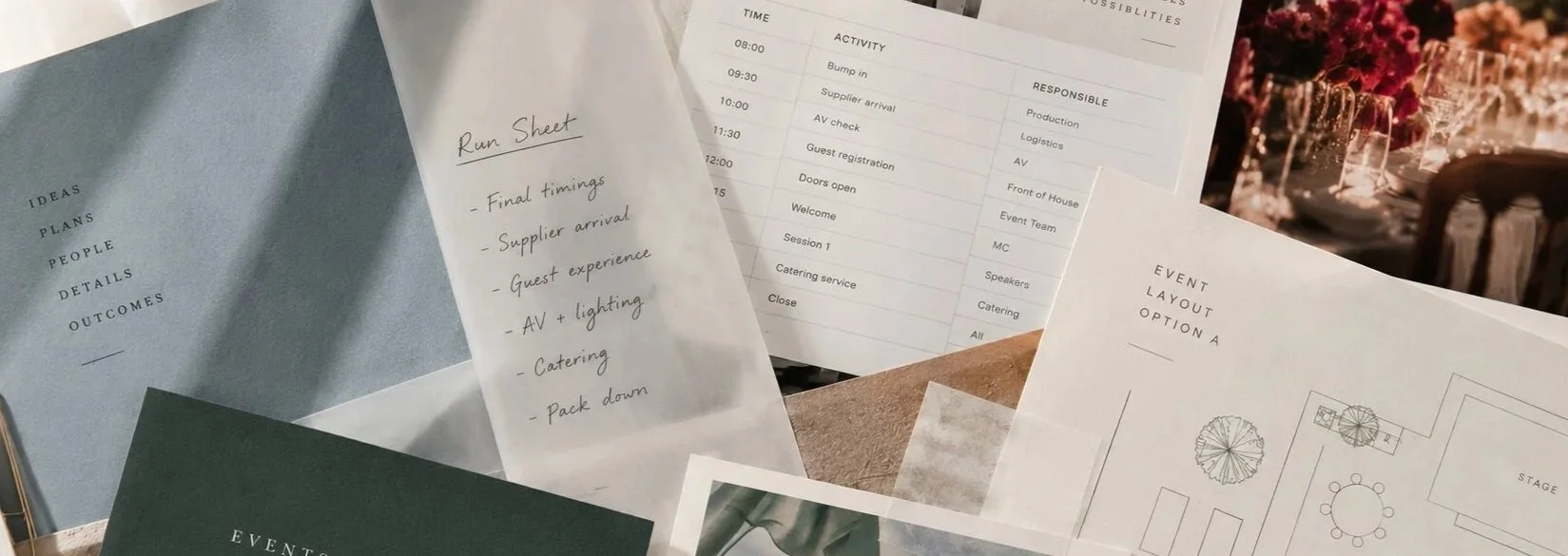
The run sheet: The one document that keeps your event calm
Guests will never see it, and most businesses don’t think about it until the week of the event. But the run sheet is often the difference between an event that feels effortless and one that feels slightly chaotic.
In the field of event management in Sri Lanka, it’s one of the first things to be built and the last thing to stop being updated. Everything that happens on the day, from the first supplier arriving to the last guest leaving, is written down in one place.
What is a run sheet?
A run sheet is a minute-by-minute plan of the event. It lists what happens, when it happens, who is responsible, and what is needed to make it work. Think of it as the script behind the scenes.
It’s different from a general schedule or programme. A programme tells guests what to expect. A run sheet tells the team exactly how to deliver it, including all the things guests are never meant to notice.
Why it matters more than people think
Events involve many people working at the same time. Sound technicians, caterers, performers, decorators, security, and front of house staff all depend on one another. If one of them is unsure about timing, the effect travels through the whole evening.
A good run sheet removes the guesswork. Nobody has to wonder when the speeches start, who cues the music, or when the food comes out. Decisions are made in advance, so the team can stay calm when something unexpected happens.
What should go in it
The best run sheets are detailed without being overwhelming. Most include the following:
- Exact timings for each part of the event
- The person responsible for each task
- Supplier arrival, setup, and pack down times
- Cues for sound, lighting, and visuals
- Contact numbers for everyone involved
It’s also worth adding small things that are easy to forget, such as when the stage needs to be cleared or when the photographer should be in position for the big moment.
Build it backwards
The easiest way to write a run sheet is to start with the moment the event begins and work backwards. If guests arrive at seven, the doors need to open at a certain time, registration needs to be ready before that, and the setup needs to be finished before that.
Working this way makes the real timeline clear. It also shows early on whether the plan is realistic. Event organising in Colombo has its own challenges, from traffic to venue access, and those need to be built into the timings instead of discovered on the day.
Make sure everyone has the same version
A run sheet only works if everyone is looking at the same one. Last minute changes are normal, but they cause problems when only half the team hears about them.
It helps to have one person responsible for updating the document and sharing the latest version. Before the event, a short briefing with all key suppliers and staff makes sure everyone knows their part and the parts around them. A few minutes of explaining the plan out loud often catches things that look fine on paper.
Leave room for things to slip
Events rarely run perfectly to the minute. A speaker takes longer than planned, guests arrive late, or a technical issue needs a few extra minutes to fix. A run sheet that has no breathing room turns every small delay into a bigger problem.
Adding small buffers between key moments gives the team space to recover. It also helps to have a plan for what can be shortened or skipped if time runs short, so the most important parts of the event are always protected.
Where planning and creativity meet
A run sheet might sound like the most practical part of an event, but it shapes the creative side too. The timing of a reveal, the pace of the programme, and the moment the lights change all depend on it.
100andOne Events builds the run sheet alongside the creative ideas from the start, so the plan supports the experience instead of limiting it. When the timing has been thought through, the creative moments land the way they were meant to.
Where strategy and creativity meet
Behind every event is a reason for it happening. A run sheet should protect that reason, making sure the moments that matter most to the brand get the time and attention they deserve.
This is the thinking behind The Creative Congress, where strategy and creativity work together so every part of an event has a purpose. The schedule isn’t just about keeping things on time. It’s about making sure the right message reaches guests at the right moment. Event organising in Colombo works best when the creative idea and the detailed plan are built side by side.
Review it afterwards
Once the event is over, the run sheet is still useful. Comparing what was planned with what actually happened shows where time was lost and where things ran better than expected.
Those notes make the next event easier to plan. Over time, a team builds a clear sense of how long things really take, which leads to calmer days and better experiences for guests.
A quick checklist
Before your next event, ask yourself:
- Do we have a run sheet with timings for every part of the day?
- Does every task have a named person responsible?
- Was it built backwards from the start time?
- Does every supplier and team member have the latest version?
- Have we left enough time for delays?
If a few of these are unclear, it may be worth going back to the planning stage.
The takeaway
A smooth event isn’t an accident. It comes from a plan that’s detailed enough to keep everyone on the same page and flexible enough to handle surprises. Guests may never see the run sheet, but they will feel what it does for the event.
That’s the approach The Creative Congress takes, treating every event as a mix of careful planning and creative thinking. 100andOne Events can help bring that to life, from the first idea to the final handover. And with the right event management in Sri Lanka behind you, your event won’t just look good on the night, it will run that way too.

Recent Posts
How to write social media captions that people read
The run sheet: The one document that keeps your event calm